
The Investigation’s Human Cost
The Caves of SteelThe urgent case repeatedly threatens the people who must live with its consequences, showing how institutional crises enter bodies, homes, and working lives.
increasing Bearing strength in each event
 decreasing
Bearing strength in each eventdecreasingA Worker Displaced
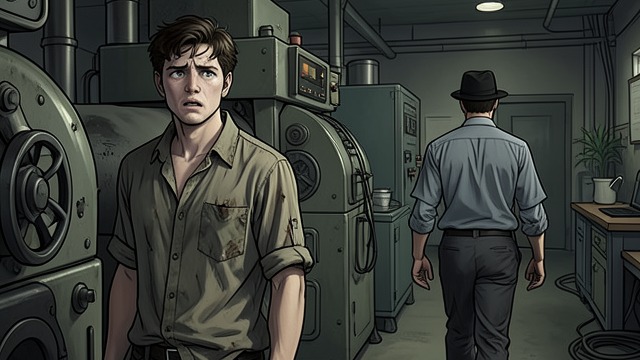
A Worker Displaced
A young man loses his place
Vince Barrett has been replaced by R. Sammy and now works on the yeast farms. He is desperate for a position in the Department but has no easy route back.
Baley recognizes the pattern
Baley answers that everyone is living through the same change, but the case soon makes him fear that he too may be replaceable. The young worker’s loss foreshadows the detective’s private anxiety.
A department decision becomes a generational wound.
The Father’s Memory
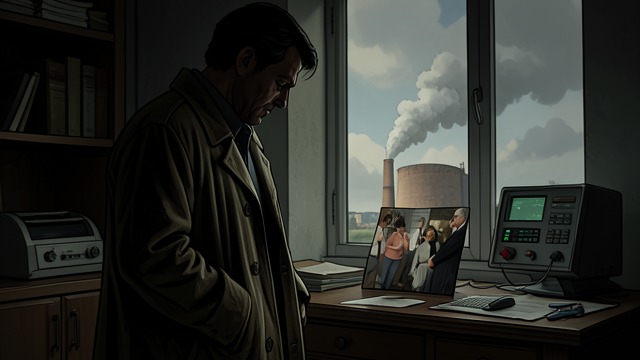
The Father’s Memory
A career destroyed
Baley recalls his father, a nuclear physicist who was declassified after an accident at a power plant. The family fell into barracks life, and Baley grew up with insecurity and loss.
Fear inherited
The memory explains why robot replacement feels personal. Baley sees in the angry crowd not only prejudice but people frightened of repeating the fate of his family.
His policing is shaped by a history he rarely discusses.
Clousarr’s Family Argument
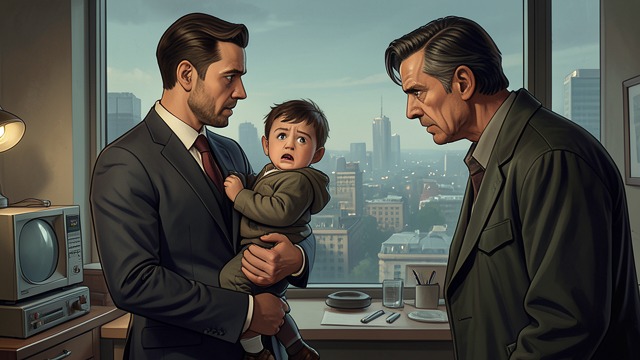
Clousarr’s Family Argument
Children at stake
Clousarr says he fears for his children’s jobs and future, not merely his own position. The concern gives his refusal of robots a family-centered logic.
Two fathers, two answers
Baley proposes emigration and training, while Clousarr rejects help from the institutions he distrusts. Their disagreement is grounded in responsibility rather than abstract ideology alone.
The future of children becomes the argument’s emotional center.
Enderby’s Families
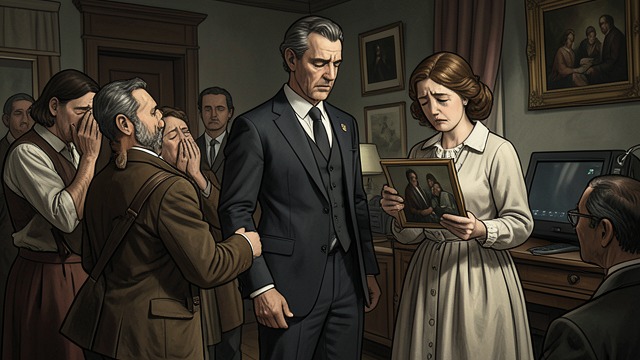
Enderby’s Families
A private loss acknowledged
Daneel lists Sarton’s surviving wife, children, parents, sister, and friends as people who will grieve if the killer is not prosecuted. The argument gives a human face to the decision to stop investigating.
Individuals weighed against humanity
Spacetown nonetheless prioritizes the future of the species over one person’s justice. Baley resists the cold calculation because he understands both the family loss and the political stakes.
The case’s large-scale solution carries intimate sorrow.
Returning to Jessie and Bentley
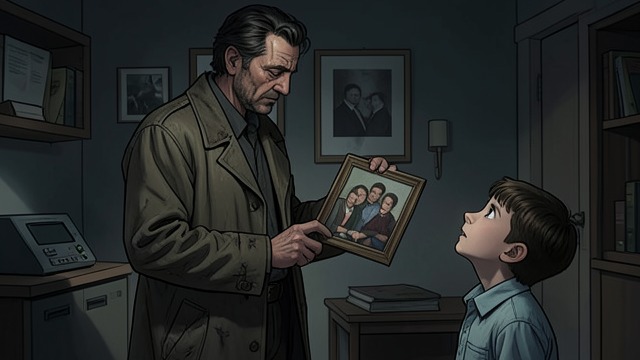
Returning to Jessie and Bentley
Exhaustion after crisis
Baley has spent days fearing declassification, arrest, and danger to his family. When the case ends, he wants to return to his wife and son and sleep.
A changed household future
He also carries a new hope that Bentley may leave Earth one day. Family life is both the refuge he seeks and the reason he now considers a wider future.
The ending joins domestic tenderness to planetary possibility.
At the opening, as Baley hears about Vince Barrett
During the shoe-store confrontation
During the arrest in Yeast-town
During Daneel’s explanation of the withdrawal
At the conclusion
